 Skip to content
Excellent Grind & Seal Floor Coating in Arizona
Meticulous preparation. Premium polyaspartic systems. Concrete floors engineered to shrug off 115° summers—and look installed-yesterday for years.
- Precision in Every Installation
- Top Systems for Arizona's Heat
- Free in person consults
Why Arizona swears by CACTUS CONCRETE COATING Co.

Working with Cactus Coatings was truly exceptional! I usually get frustrated by slow responses from service companies, but Cactus Coatings amazed me by replying to my inquiry in under an hour and quickly scheduling a quote at my home. They patiently answered all my questions, and even after their visit, I had more inquiries which they promptly addressed via text. On installation day, they arrived on time and even helped move our garage fridge inside to create space. They completed the job in just one day and left everything spotless, paying meticulous attention to detail. My partner and I are quite discerning about our home, so those finishing touches really impressed us. We let it cure for three days before moving in heavier items, and we couldn’t be happier with the results. We chose the Stonehenge color/pattern, and it complements our home beautifully.


We had a fantastic experience with Cactus Coatings. I’m sure many of you can relate to the frustration of waiting ages for replies from service providers, but Cactus Coatings responded within the hour to my initial inquiry and quickly scheduled an appointment for a quote at my home. They answered all my questions thoroughly, and even after their visit, I had more questions which they answered promptly via text. On installation day, they arrived on time and even helped move our garage fridge into the house to clear the space. They completed their work within the day and left everything spotless, paying attention to every detail. My husband and I are quite particular about our home, so those finishing touches really matter to us. We let it sit for 3 days before moving heavy items in, and we absolutely love how it looks. We chose the Stonehenge color/pattern, and it’s just perfect for our home.


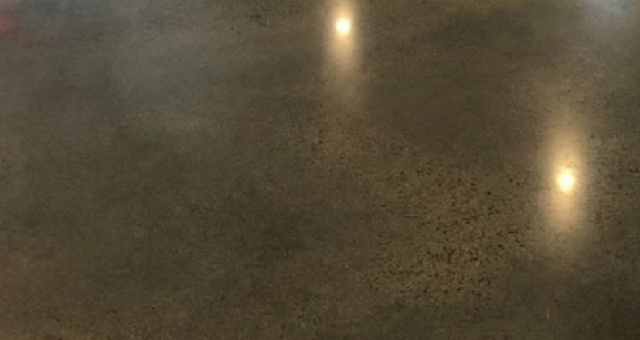
Some concrete looks better when its character stays visible.
Grind and Seal in Arizona gives property owners that option without taking the slab through a full mechanical polishing process. Cactus Concrete Coatings Company grinds the existing concrete to reveal the desired surface, then protects it with a topical sealer.
The finished floor can show aggregate, patches, tonal changes, and other natural details instead of covering everything beneath an opaque coating. For offices, retail spaces, showrooms, residential interiors, and selected commercial areas, that less-manufactured appearance can be exactly the point.

Grind Depth Sets the Look, and Sealing Isn't Polishing
The first grinding passes set the visual direction for the whole floor, and there’s no undoing that choice once material comes off. A lighter grind exposes mostly fine sand and subtle aggregate, while a deeper grind reveals more stone for a stronger exposed-concrete look.
That’s why Cactus Concrete Coatings Company nails down the desired exposure before committing to a depth across the slab. Concrete itself varies from section to section too; aggregate distribution shifts, old finishing work changes exposure, and repairs often grind differently than the surrounding material.
A grind and seal floor develops from whatever concrete is actually in the building, not a printed pattern chosen in advance. Grind and seal and polished concrete can look similar in photos, but they’re built completely differently. Polished concrete uses progressively finer diamond tooling to refine the concrete itself, with the sheen coming from that mechanical process.
Grind and seal uses fewer grinding stages and relies on a topical sealer to create the final surface, whether matte, satin, or glossy. That difference carries real weight for maintenance too: polished concrete’s finish lives in the slab, while grind and seal’s finish lives in the sealer sitting on top of it.
Grind Sealer Sets the Character in Arizona
Grinding decides what surface gets exposed, but the sealer decides how that exposed concrete actually reads afterward. Matte keeps things subdued, satin adds a bit of depth without much reflection, and higher-gloss sealers deepen color and bring out more contrast in the aggregate.
Cactus Concrete Coatings Company factors the room into that choice; more visual depth might suit a retail space, a softer finish might fit an office better, and a home might want almost no reflection at all.
Grinding also doesn’t erase a slab’s history; it just exposes more of it. Old patches can stay visible, crack repairs may not match the surrounding color, and spots where walls or fixtures once stood can expose a different texture entirely once ground down.
None of that means the job was done wrong; it just means grind and seal keeps more of the actual slab visible than an opaque coating would. Owners chasing perfectly uniform color are usually better served by a different system, while those who like a bit of natural variation tend to find this look genuinely appealing.

Where Grind and Seal Fits Best in Arizona
Grind and seal works especially well anywhere exposed concrete already fits the design. Retail spaces can rotate layouts without a busy pattern getting in the way, showrooms gain a clean industrial look, and offices get a continuous concrete surface across larger open floor plans.
Certain homes suit it too, particularly where the owner wants the concrete to stay visibly concrete.
Commercial spaces benefit as well, since this system creates a protected surface without needing the full refinement of true polished concrete. The slab still determines whether it’s actually a good fit; heavy contamination or existing coatings can all change what the prep plan looks like.
Cactus Concrete Coatings Company can walk through this alongside its other concrete flooring services before locking in a direction.
Maintenance Depends on the Sealer Above
A grind and seal concrete floor is relatively straightforward to clean, but the topical finish still wears over time. Fine grit should be removed regularly because it can act as an abrasive beneath foot traffic.
Spills should also be cleaned before they remain on the floor for long periods. As the sealer experiences wear, heavily used sections may eventually need maintenance or another protective application.
That differs from polished concrete, where mechanical refinement creates the surface itself. The sealer is therefore not a minor final step. It determines much of the daily behavior of the finished grind and seal system. Understanding that before installation helps set more realistic maintenance expectations.
Why Choose Cactus Concrete Coatings Company
- Grinding Stops at the Intended Exposure
Grinding deeper is easy. Putting removed concrete back is impossible. Cactus Concrete Coatings Company considers how much aggregate should show before progressing across the slab. That keeps the grinding depth tied to the intended finish instead of chasing maximum exposure for every project.
- Existing Repairs Are Discussed Honestly
A patched floor can still become an attractive grind and seal surface. However, the patches may remain visible. Cactus Concrete Coatings Company considers those areas before installation so owners understand which features may become part of the final appearance.
- Sealer Choice Follows the Room
Gloss is not treated as an automatic upgrade. The final sheen depends on lighting, traffic, cleaning expectations, and how natural the concrete should feel. That keeps the finished surface appropriate for the space instead of simply making it as reflective as possible.
Arizona Grind and Seal Questions
Does grind and seal look the same as polished concrete?
Not exactly. Grind and seal uses a topical sealer to create protection and sheen. Polished concrete develops its finish through progressively finer mechanical polishing. Grind and seal usually requires fewer refinement stages.

Can I choose how much aggregate appears on the floor?
To a degree. Grinding depth can expose anything from lighter salt-and-pepper detail to more noticeable aggregate. However, the slab’s original construction controls where aggregate actually sits. Complete uniformity cannot be guaranteed.
Will old patches disappear after grinding?
Usually not completely. Grinding can make patches flush with surrounding concrete, but their color and material may remain visible. That natural variation should be considered part of the design before choosing grind and seal.
Can moisture cause a grind and seal floor to fail?
Yes. Some topical sealers can blister, whiten, or separate when moisture vapor pressure is excessive beneath them. Slab moisture should therefore be considered before choosing the sealer system.
Is grind and seal less expensive than polished concrete?
It can be because the process normally uses fewer grinding and refinement stages. However, slab condition, repairs, coating removal, exposure level, and sealer choice still influence the actual project cost.
Premium Concrete Coatings
From our home base in Surprise, AZ, Cactus Concrete Coating Company delivers premium epoxy floor installation and concrete coatings across the West Valley and greater Phoenix area. Wherever your slab is, it gets the same meticulous prep, the same elite materials, and a free in-person estimate to start.
Keep the Concrete Character Worth Seeing
Grind and seal works best when the slab’s natural variation is part of the appeal rather than something you want completely hidden. Cactus Concrete Coatings Company can inspect your concrete, discuss the desired exposure and sheen, and determine whether Grind and Seal in Arizona fits the space.