 Skip to content
Exceptional Concrete Patio Coating Service in Arizona
Meticulous preparation. Premium polyaspartic systems. Concrete floors engineered to shrug off 115° summers—and look installed-yesterday for years.
- Precision in Every Installation
- Top Systems for Arizona's Heat
- Free in person consults
Why Arizona swears by CACTUS CONCRETE COATING Co.

Working with Cactus Coatings was truly exceptional! I usually get frustrated by slow responses from service companies, but Cactus Coatings amazed me by replying to my inquiry in under an hour and quickly scheduling a quote at my home. They patiently answered all my questions, and even after their visit, I had more inquiries which they promptly addressed via text. On installation day, they arrived on time and even helped move our garage fridge inside to create space. They completed the job in just one day and left everything spotless, paying meticulous attention to detail. My partner and I are quite discerning about our home, so those finishing touches really impressed us. We let it cure for three days before moving in heavier items, and we couldn’t be happier with the results. We chose the Stonehenge color/pattern, and it complements our home beautifully.


We had a fantastic experience with Cactus Coatings. I’m sure many of you can relate to the frustration of waiting ages for replies from service providers, but Cactus Coatings responded within the hour to my initial inquiry and quickly scheduled an appointment for a quote at my home. They answered all my questions thoroughly, and even after their visit, I had more questions which they answered promptly via text. On installation day, they arrived on time and even helped move our garage fridge into the house to clear the space. They completed their work within the day and left everything spotless, paying attention to every detail. My husband and I are quite particular about our home, so those finishing touches really matter to us. We let it sit for 3 days before moving heavy items in, and we absolutely love how it looks. We chose the Stonehenge color/pattern, and it’s just perfect for our home.


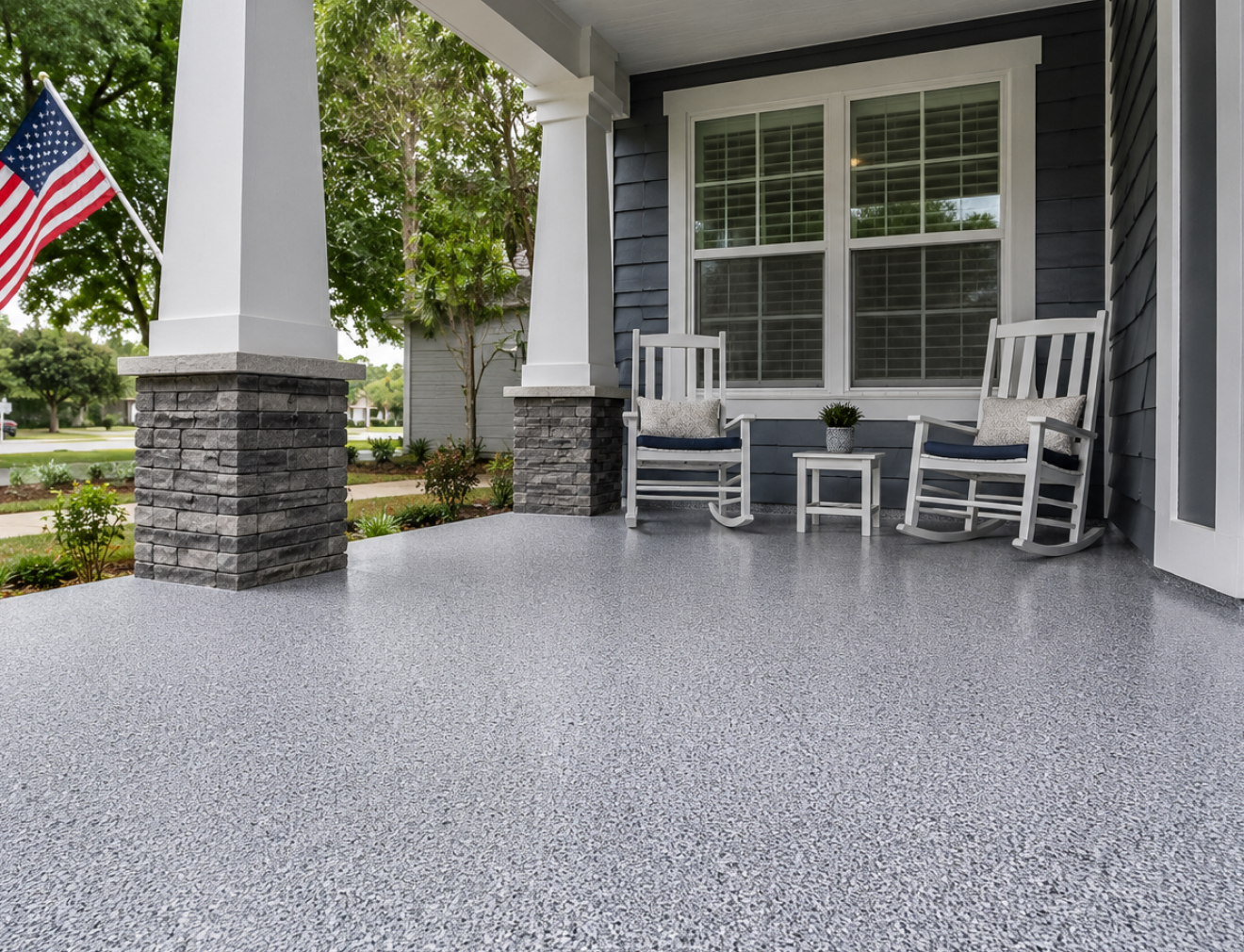
A patio sits somewhere between the house and the outdoors, so its floor has to satisfy both sides.
It should look connected to the home while handling sunlight, dust, furniture, foot traffic, and occasional water. Cactus Concrete Coatings Company installs concrete patio coatings in Arizona for homeowners who want that balance handled properly. Instead of copying a garage system onto an outdoor slab, each patio is considered around its shade, exposure, layout, and surrounding design. That distinction matters because Arizona patios can move from full shade to intense sun within the same afternoon.

Patio Flooring Should Belong With the Arizona House
A patio is usually visible from inside the home. That changes the way the floor should be designed.
The finish may sit beside exterior walls, sliding doors, stonework, landscaping, furniture, and outdoor kitchens. Therefore, color should support those elements instead of making the patio feel like a separate utility room. Decorative flakes can work beautifully outdoors when the blend suits the setting.
Earth tones, softer contrast, and more natural-looking combinations can give the surface a quieter appearance. The correct finish should make the patio feel more finished without overpowering everything placed on top of it.
Shade Patterns Matter More Than Many Expect
Not every square foot of a covered patio receives the same exposure. Roof lines, walls, trees, pergolas, and neighboring structures can create moving shade throughout the day. Meanwhile, outer edges may receive direct sunlight for hours. Those differences matter when selecting concrete coatings for patios.
Prolonged sun exposure tends to fade traditional epoxy’s color, so heavily exposed patios usually do better with a UV-stable polyaspartic build instead. Arizona coating companies commonly emphasize this distinction for outdoor concrete.
That does not mean every patio needs the same coating build. The amount of exposure should guide the recommendation rather than the simple fact that the slab sits outdoors.

Furniture Changes How a Patio Floor Works
Outdoor furniture creates its own wear pattern. Tables stay in one position for long periods. Chairs move repeatedly across smaller areas. Planters can trap dust or moisture underneath them. Heavy grills and storage pieces place concentrated weight on the surface. Those details affect how the patio gets used.
A patio coating should remain practical under furniture while still being easy to sweep and wash. Texture matters here as well. A highly aggressive finish may create more drag when chairs move. However, an extremely smooth surface may become less comfortable when rain or water reaches it.
The best result usually sits between those extremes. Cactus Concrete Coatings Company considers how the patio is furnished instead of treating the floor as an empty slab that will stay empty after installation.
Patio Texture Needs More Than One Answer
Outdoor concrete frequently gets wet. That can come from rain, cleaning, irrigation, nearby pool activity, or simply washing down the surface. Smooth resin coatings can become slick when water sits on top. Overdo the texture on a patio, and it stops being pleasant to walk on barefoot, on top of getting harder to clean.
Texture should reflect the actual room. A sheltered seating area may need a different finish from a patio beside a pool or frequently wet walkway. That is why traction should be discussed during system selection rather than added automatically at the end.
Arizona Heat Changes Installation Conditions
The patio may sit outside all year, but installation happens during a very specific set of conditions. Air temperature matters. More importantly, slab temperature can climb considerably under direct Arizona sun.
Fast-curing products can become harder to work with when the surface is very hot. That can affect application timing, working time, and how the installer plans the coating sequence.
For this reason, concrete patio floor installation should account for the conditions on the actual day rather than rely on a generic application schedule.
We evaluate exposure and product behavior before coating begins. The same principle applies to curing. A fast product still needs to be installed under suitable conditions to deliver the intended finish.
The Right Patio System May Use Different Materials
An epoxy patio floor does not need to mean one chemistry across every layer.
Different products can perform different jobs. One layer may provide bonding and build. Another creates color or flake coverage. A UV-stable topcoat can then protect the decorative surface against sunlight.
Some patios do better with polyaspartic for the UV resistance alone; others lean toward straight epoxy where it fits the build, or grind and seal when the homeowner wants the concrete itself to show.
The point is not to force one system everywhere. Cactus Concrete Coatings Company can compare the available concrete coating services against the patio itself before the final finish is selected.
Why Choose Cactus Concrete Coatings Company
- We Map Before Product Choice
The center of a covered patio may stay protected while the outer edge receives direct Arizona sun. Cactus Concrete Coatings Company looks at those exposure zones before deciding how the coating system should be built.
- The Finish Is Designed
Patio flooring shares the view with landscaping, exterior colors, furniture, and architectural details. Cactus Concrete Coatings Company considers those surroundings before recommending flake colors, contrast levels, or exposed-concrete finishes.
- Furniture Use Influences Texture Decisions
Patios are rarely empty rooms. Chairs move. Tables stay fixed. Outdoor equipment can remain in place for months. Those patterns matter when choosing surface texture and finish characteristics. The flooring decision considers how the patio will actually be arranged once the project is complete.
- Outdoor Prep Gets the Same Precision
Outdoor concrete can carry previous sealers, surface wear, cracks, dirt, and years of exposure. We apply directly to grinding, repairs, edges, and coating application before the patio receives its decorative fini
Arizona Patio Coating Questions
Is epoxy a good choice for a patio in direct Arizona sun?
A sun-heavy patio is exactly where standard epoxy’s tendency to discolor becomes a real problem, which is why the protective topcoat there often shifts to a UV-stable polyaspartic. The complete system should reflect how much sun actually reaches the slab.

Can patio coatings become slippery after rain?
Yes. Smooth resinous finishes can become slick when wet. Traction additives or textured systems can improve grip, but the amount should remain practical for cleaning and barefoot comfort.
Will a flake patio look too much like a garage floor?
It does not have to. Flake size, color, contrast, and coverage can change the appearance considerably. Softer earth tones and more restrained blends can make the patio feel closer to stone or terrazzo than a traditional garage coating.
Does patio furniture damage a coated concrete floor?
Normal outdoor furniture can work well on a professionally installed coating. However, dragging heavy pieces repeatedly can create wear. Furniture feet and pads can also help reduce concentrated abrasion in high-use seating areas.
Can an older patio with cracks still be coated?
Yes, depending on the slab condition. Cracks and damaged areas should be evaluated and repaired where appropriate before coating. However, concrete can continue moving, so crack repair does not guarantee that every repaired area will remain permanently invisible.
Premium Concrete Coatings
From our home base in Surprise, AZ, Cactus Concrete Coating Company delivers premium epoxy floor installation and concrete coatings across the West Valley and greater Phoenix area. Wherever your slab is, it gets the same meticulous prep, the same elite materials, and a free in-person estimate to start.
Make the Patio Feel Finished
A patio does not need to look like an indoor room, but it should feel intentional. Cactus Concrete Coatings Company can evaluate the slab, study its sun exposure, discuss how the area is furnished, and recommend a finish suited to your Arizona outdoor space.