 Skip to content
Elite Polished Concrete Flooring Service in Arizona
Meticulous preparation. Premium polyaspartic systems. Concrete floors engineered to shrug off 115° summers—and look installed-yesterday for years.
- Precision in Every Installation
- Top Systems for Arizona's Heat
- Free in person consults
Why Arizona swears by CACTUS CONCRETE COATING Co.

Working with Cactus Coatings was truly exceptional! I usually get frustrated by slow responses from service companies, but Cactus Coatings amazed me by replying to my inquiry in under an hour and quickly scheduling a quote at my home. They patiently answered all my questions, and even after their visit, I had more inquiries which they promptly addressed via text. On installation day, they arrived on time and even helped move our garage fridge inside to create space. They completed the job in just one day and left everything spotless, paying meticulous attention to detail. My partner and I are quite discerning about our home, so those finishing touches really impressed us. We let it cure for three days before moving in heavier items, and we couldn’t be happier with the results. We chose the Stonehenge color/pattern, and it complements our home beautifully.


We had a fantastic experience with Cactus Coatings. I’m sure many of you can relate to the frustration of waiting ages for replies from service providers, but Cactus Coatings responded within the hour to my initial inquiry and quickly scheduled an appointment for a quote at my home. They answered all my questions thoroughly, and even after their visit, I had more questions which they answered promptly via text. On installation day, they arrived on time and even helped move our garage fridge into the house to clear the space. They completed their work within the day and left everything spotless, paying attention to every detail. My husband and I are quite particular about our home, so those finishing touches really matter to us. We let it sit for 3 days before moving heavy items in, and we absolutely love how it looks. We chose the Stonehenge color/pattern, and it’s just perfect for our home.


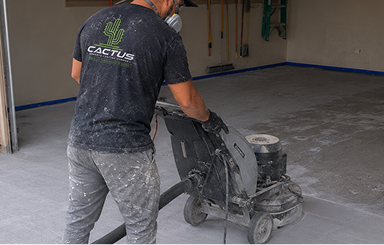
Polished concrete reveals what is already there, then refines it through grinding, densifying, and polishing until the surface develops the desired level of sheen.
Cactus Concrete Coatings Company installs Polished Concrete in Arizona for properties where the concrete itself deserves to become part of the finished space. The result can feel clean, architectural, and understated, but every slab develops differently. Aggregate exposure, previous repairs, tonal variation, and original finishing methods all influence what the final floor can become.

The Existing Slab Becomes the Design
Polished concrete starts with a very different question from resin flooring. Instead of asking what color should cover the slab, the process asks what the concrete can reveal.
Grinding may expose fine sand, small aggregate, or larger stone depending on the polishing depth and existing slab. That exposure changes the floor visually.
A light polish can leave more of the original surface character intact. Deeper grinding can reveal noticeably more aggregate.
Current concrete-polishing guidance describes these exposure levels as a major design choice because the appearance changes as more of the slab is removed.
Cactus Concrete Coatings Company considers the desired look before grinding begins. Once aggregate becomes exposed, it cannot simply be put back.
Polishing Levels & Why Densification Matters
Polished concrete moves from a soft satin look to a much higher reflective finish, and that shift happens through progressively finer polishing steps rather than layering on a thick decorative resin.
A lower sheen keeps things quiet and natural, while a higher polish reflects more light, a look that suits showrooms, offices, and open retail spaces well. But more reflection also makes surface variation harder to hide, which is why the sheen level needs to match the room itself, factoring in lighting, furniture, display density, and how much maintenance the owner actually wants to keep up with.
Polishing isn’t only about achieving shine, either. A densifier typically gets applied during the process to chemically react with the concrete and strengthen its surface, creating a harder base that can then take on further polishing stages. An epoxy system, by contrast, creates a controlled decorative look over the existing concrete; polishing instead exposes the slab itself, making it more visible rather than covering it.

Natural Variation & Where Polished Concrete Fits Best
Polished concrete isn’t manufactured tile, and it was never going to look like it.
Color can shift across a slab, aggregate may show up heavier in some spots than others, and old repairs, saw cuts, or patched cracks often stay visible even after polishing. None of that means the job was done wrong; it reflects how that concrete was originally poured, finished, repaired, and lived on over the years.
This comes up constantly when property owners expect even aggregate from a slab that was never poured with polishing in mind. Cactus Concrete Coatings Company sets that expectation early, since the best polished floor works with a slab’s natural variation.
That understated character is exactly what makes polished concrete such a strong fit for open interior spaces. Retail stores can rotate displays without a busy pattern competing for attention, showrooms benefit from the clean sightlines and reflectivity that come with higher polish levels, and offices gain a contemporary look with fewer flooring transitions.
Certain homes suit it too, where the architecture already leans into exposed concrete; a polished basement floor can work well when the slab is suitable, and the owner is on board with natural variation.
Repairs Can Still Show Through
Polishing doesn’t guarantee every repair disappears, and that’s worth knowing before any equipment touches the slab. Crack fillers polish differently than the surrounding concrete, and spots where a wall once stood can read differently from the original pour.
Some owners like that added character, others want a more uniform look, which is exactly why installers need to inspect the slab closely before promising a specific outcome.
If an owner wants tight color consistency on a heavily patched floor, a coating system is often the better fit. The right call really comes down to what condition the concrete is already in.
Once installed, polished concrete stays fairly easy to live with. Regular dust removal keeps fine grit from acting like sandpaper underfoot, and damp cleaning handles most everyday spills and soil.
That said, it’s not permanently stain-proof; liquids still need prompt cleanup, especially anywhere the surface might absorb them, and protective guards or stain-resistant treatments can help depending on the application. Harsh acidic cleaners are best avoided since they can damage cement-based surfaces.
Why Choose Cactus Concrete Coatings Company
- Exposure Is Chosen Before It Is Created
Grinding deeper can expose more aggregate, but that change is permanent. Cactus Concrete Coatings Company discusses the desired exposure level before the polishing sequence advances. We keep the finished look tied to an actual design decision.
- Repairs Are Discussed Before the Polish
Patches and crack repairs can remain visible after polishing. Instead of promising that every old mark will disappear, Cactus Concrete Coatings Company considers how those areas may read in the finished floor.
- Sheen Is Matched to the Room
The highest possible gloss is not automatically the best finish. Office lighting, showroom reflection, retail displays, and natural daylight can all change how the floor looks. Cactus Concrete Coatings Company considers those conditions before determining the final polishing level.
Arizona Polished Concrete Questions
Will polished concrete look exactly like a sample?
No. A sample can show sheen and general character, but your slab controls the final aggregate and tonal variation. Existing repairs, original finishing, and concrete composition all influence the result.

Can cracks still be visible after polishing?
Yes. Cracks may be repaired, but the repair material can remain visible against surrounding concrete. Polishing does not create the same color uniformity as an opaque coating system.
Is polished concrete slippery when glossy?
A high-gloss appearance does not automatically mean the surface is dangerously slick when dry. However, wet conditions change traction. Areas regularly exposed to water should be evaluated carefully before choosing polished concrete.
Can an older concrete slab still be polished?
Many older slabs can be polished, but condition matters. Previous coatings, adhesives, patches, serious damage, contamination, and weak concrete can affect suitability and preparation requirements.
Is polished concrete better than epoxy flooring?
They solve different problems. Polished concrete reveals and refines the slab. Epoxy creates a separate resinous surface with greater control over color and decoration. The better choice depends on the slab and desired appearance.
Premium Concrete Coatings
From our home base in Surprise, AZ, Cactus Concrete Coating Company delivers premium epoxy floor installation and concrete coatings across the West Valley and greater Phoenix area. Wherever your slab is, it gets the same meticulous prep, the same elite materials, and a free in-person estimate to start.
Let the Concrete Show What It Can Become
Polished concrete works best when the property owner appreciates the material already underfoot.
Cactus Concrete Coatings Company can inspect the slab, discuss aggregate exposure and sheen, and determine whether Polished Concrete in Arizona fits the space you have in mind.