 Skip to content
Outstanding Epoxy Floor Types We Offer in Arizona
Meticulous preparation. Premium polyaspartic systems. Concrete floors engineered to shrug off 115° summers—and look installed-yesterday for years.
- Precision in Every Installation
- Top Systems for Arizona's Heat
- Free in person consults
Why Arizona swears by CACTUS CONCRETE COATING Co.

Working with Cactus Coatings was truly exceptional! I usually get frustrated by slow responses from service companies, but Cactus Coatings amazed me by replying to my inquiry in under an hour and quickly scheduling a quote at my home. They patiently answered all my questions, and even after their visit, I had more inquiries which they promptly addressed via text. On installation day, they arrived on time and even helped move our garage fridge inside to create space. They completed the job in just one day and left everything spotless, paying meticulous attention to detail. My partner and I are quite discerning about our home, so those finishing touches really impressed us. We let it cure for three days before moving in heavier items, and we couldn’t be happier with the results. We chose the Stonehenge color/pattern, and it complements our home beautifully.


We had a fantastic experience with Cactus Coatings. I’m sure many of you can relate to the frustration of waiting ages for replies from service providers, but Cactus Coatings responded within the hour to my initial inquiry and quickly scheduled an appointment for a quote at my home. They answered all my questions thoroughly, and even after their visit, I had more questions which they answered promptly via text. On installation day, they arrived on time and even helped move our garage fridge into the house to clear the space. They completed their work within the day and left everything spotless, paying attention to every detail. My husband and I are quite particular about our home, so those finishing touches really matter to us. We let it sit for 3 days before moving heavy items in, and we absolutely love how it looks. We chose the Stonehenge color/pattern, and it’s just perfect for our home.


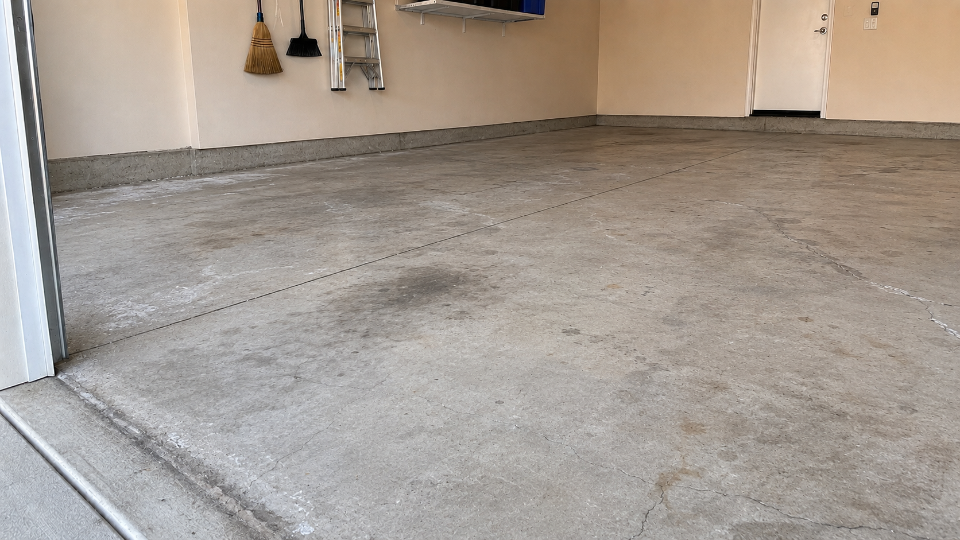
The best-looking floor sample can still be the wrong choice for your concrete. Arizona property owners have several coating and concrete finish options, but they do not perform the same way. Sunlight, room use, slab condition, desired appearance, and return-to-service time can all change the recommendation.
Cactus Concrete Coatings Company offers six epoxy floor types in Arizona and related concrete finishes. Instead of treating them as interchangeable products, each one is matched to the setting where its strengths make the most sense.
Flake Flooring Brings Texture and Variation
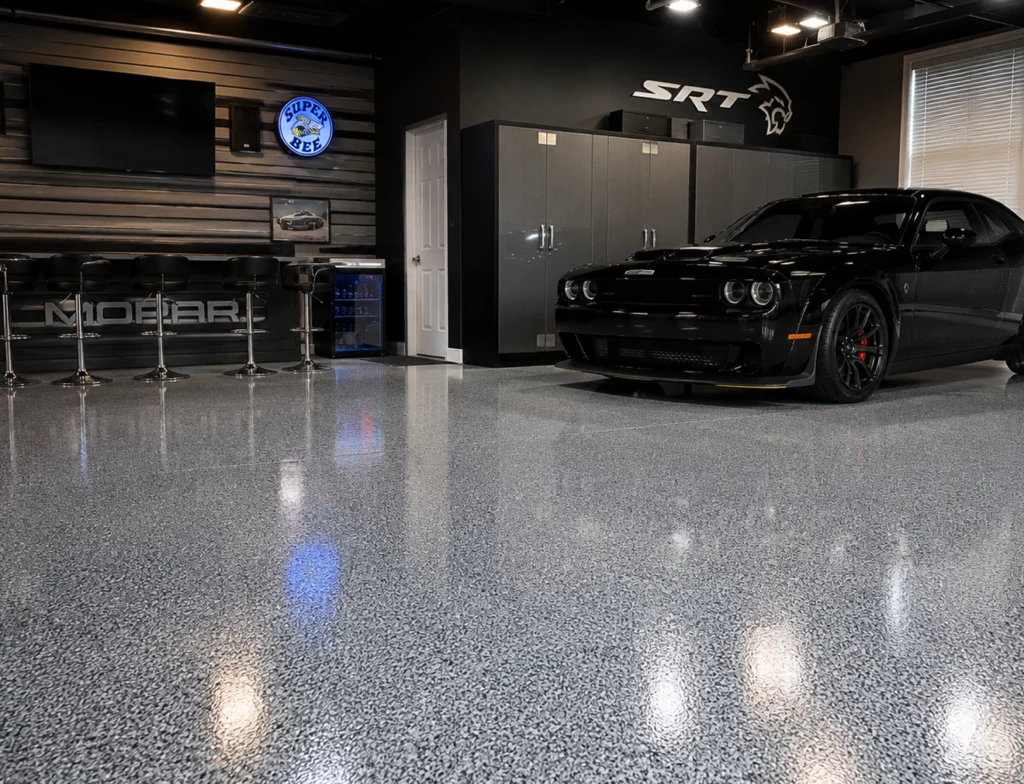
Flake system flooring uses decorative chips broadcast across a coated base layer before the surface receives its protective finish.
The flakes create visible color variation, which helps break up the appearance of a large concrete slab. That makes this system especially useful in garages, work areas, and practical commercial rooms.
Different flake blends can also change the character of the floor considerably. Neutral combinations can remain understated, while higher-contrast blends create a stronger visual effect.
In Arizona, the complete coating build matters just as much as the flakes themselves. UV-stable topcoats can help maintain appearance where sunlight reaches the finished surface.
Flake flooring also gives property owners some freedom with texture. However, more aggressive texture can affect how easily a floor cleans, so that decision should match the room.

Metallic Epoxy Turns the Floor Into the Feature
Metallic epoxy works very differently from decorative flakes.
Instead of creating a repeated chip pattern, metallic pigments move through the coating while it cures. The finished surface develops waves, depth, and shifts in tone.
Because that movement cannot be duplicated exactly, metallic floors suit spaces where individuality matters. Showrooms, finished interiors, offices, retail areas, and other presentation-focused rooms are common candidates.
However, metallic epoxy flooring demands more planning than simply selecting two colors. Lighting, room size, surrounding finishes, and viewing angles influence how the finished floor reads.
Direct sunlight also deserves attention. Metallic epoxy floors run into the same UV problem as any other epoxy: prolonged sun exposure discolors the resin unless a UV-stable topcoat is added. Current Arizona flooring guidance commonly pairs decorative epoxy layers with polyaspartic protection for that reason.
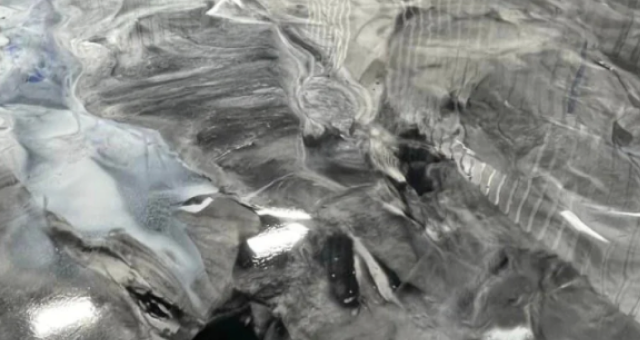
Polished Concrete Uses the Slab Itself
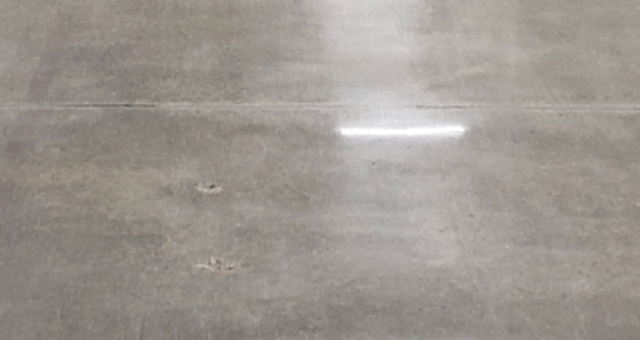
Polished concrete takes a completely different route. Rather than placing a decorative coating over the slab, mechanical grinding and polishing refine the existing concrete surface.
That means the concrete itself becomes part of the finished design. Natural tonal differences, aggregate exposure, previous slab history, and small variations may remain visible. For many commercial interiors, offices, retail areas, and contemporary residential spaces, that character is part of the appeal.
Polished concrete can provide a clean, understated finish without creating the heavier appearance of a coated floor. However, homeowners and businesses expecting perfectly uniform color should understand that polished concrete does not behave like a painted surface.
The finished result depends heavily on the slab already in place.
Epoxy Flooring Still Has an Important Role
Epoxy flooring has been used for decades because it provides strong adhesion, good film build, and broad decorative flexibility. It can serve as a base layer, decorative finish, or part of a multi-product floor system.
People comparing types of epoxy flooring sometimes assume the entire installation must use one chemistry from bottom to top. In professional systems, different layers can perform separate jobs.
For example, epoxy may provide the bonding and build characteristics needed underneath a decorative layer. A polyaspartic topcoat may then add greater UV stability and faster cure performance.
That layered approach is especially relevant in Arizona, where intense sunlight can expose the limitations of UV-sensitive materials.
Epoxy remains valuable. The important question is where it belongs within the complete floor.
Polyaspartic Flooring Answers Different Needs
Polyaspartic flooring gets attention because it cures much faster than many traditional epoxy products.
That can reduce downtime for businesses and shorten the period a residential space remains unavailable. However, speed is only part of its value. Where the sun really hits- on patios, entrances, and bright garages- polyaspartic’s UV resistance is what makes it the practical choice over standard epoxy. Working time can be shorter, though, particularly under high temperatures. Therefore, installation experience matters.
Recent flooring discussions also reflect the same tradeoff. Users commonly compare epoxy’s slower cure and lower material cost against polyaspartic’s faster return to service and stronger UV resistance. Cactus Concrete Coatings Company evaluates those differences against the actual project rather than assuming polyaspartic flooring automatically belongs everywhere.

Grind and Seal Keeps Concrete Looking Like Concrete
Some property owners want the natural character of concrete without polishing it through multiple refinement stages. Grind and seal fits that preference.
The concrete surface is mechanically ground, which can expose aggregate and remove surface imperfections. A protective sealer then becomes the finished layer.
The result tends to look more natural and industrial than decorative epoxy flooring.
That makes grind and seal attractive for offices, retail spaces, commercial rooms, workshops, and interiors where exposed concrete suits the surrounding design. It can also provide a more economical path than certain decorative systems, depending on the slab and desired finish.
However, the concrete remains visually important. Patches, tonal changes, aggregate variation, and old marks may still influence the result. For some spaces, that character is exactly the point.
Cactus Concrete Coatings Company provides these options across its concrete coating services because a wider product range creates better room for an honest recommendation.

Why Choose Cactus Concrete Coatings Company
- You Are Not Locked Into One Product
Some coating companies specialize so narrowly that every project receives nearly the same answer.
If exposed concrete makes more sense than a decorative coating, the recommendation can move in that direction. If UV stability matters more, the system can change again.
- The Finish Is Chosen After the Exposure Is Known
Cactus Concrete Coatings Company considers sunlight, room use, cleaning, texture needs, and slab condition before finalizing the coating build.
That matters in Arizona, where strong UV exposure can reveal the wrong chemistry faster than many cooler or more enclosed environments.
- System Layers Are Treated as Separate Decisions
The base coat, decorative layer, and topcoat do not need to perform identical jobs.
One layer may prioritize adhesion. Another creates the appearance. The final coat may provide UV stability, texture, or added wear protection.
- Samples Come After the Technical Questions
Color matters, but it should not lead to the entire decision.
A good floor recommendation begins with the existing concrete, then considers exposure and use. Once those factors narrow the suitable systems, decorative choices become far more useful.
Commercial Flooring Questions Arizona Owners Ask
Is polyurea flooring the same as polyaspartic flooring?
Polyaspartic is a type of polyurea chemistry modified to provide more workable application characteristics. Both terms appear in the coating industry, but product formulations and cure behavior vary. Property owners should compare the actual system specification rather than relying only on the category name.

Which floor type handles Arizona sunlight best?
Polyaspartic products are commonly selected where UV stability matters because they resist yellowing better than standard epoxy. However, some systems still use epoxy underneath and place a UV-stable polyaspartic topcoat above it. The right build depends on how much direct sunlight reaches the floor.
Does flake flooring hide concrete imperfections?
The decorative pattern can make minor visual irregularities less noticeable, but flakes do not repair bad concrete. Cracks, weak areas, previous coatings, and surface damage still require proper preparation. Every experienced installer puts grinding before any decorative layer, not after.
Is polished concrete more natural-looking than epoxy flooring?
Yes. Polished concrete refines the existing slab, so aggregate and natural variation remain part of the appearance. Epoxy creates a separate resinous surface over the concrete. The better choice depends on whether you want the slab visible or prefer a more controlled decorative finish.
Can outdoor floors become slippery with a smooth coating?
Yes. A smooth resinous surface can become slick when water is present. Texture or traction additives may be added where appropriate. However, excessive grit can make maintenance and barefoot comfort worse, so outdoor texture should match how the area is actually used.
Choose the System Before Choosing the Color
A floor sample tells you what a coating can look like. It does not tell you whether that system belongs on your concrete. Cactus Concrete Coatings Company can compare the slab, location, exposure, intended use, and finish you prefer. From there, the flooring choice becomes much easier to justify.